I use three ordinary tools to keep a clear head: a short period of sitting still, a few stoic principles, and the practice of focus when a day tries to pull me apart. I don’t present them as a personality, and I don’t present them as a teaching. I am Craig Matthew Feigin. I am a husband and a father first. I train, I sit, and I try to stay useful.
I will not invent a scene in which a single book, or a single morning, changed everything. What I have is a set of habits. I sit. I notice that my mind has left the room. I bring it back. I remember, when I can, which parts of the hour are actually mine to govern. I do it again.
Meditation, without the costume
Meditation, as I practice it, is sitting still on purpose. That is the least fashionable sentence I can write about it, and it is also the most accurate. I am not making a medical claim. I am not selling a method. If sitting still has been useful to me, it is because it is a place where I cannot fake attention for very long.
The mind, left alone for two minutes, will try to reopen the day. It will walk back through a conversation. It will start building the next one. It will decide that this is a good time to solve a problem that does not need solving right now. None of that is a failure. It is just what minds do. The practice is noticing, and returning, without making a scene out of either.
I used to think that a restless sit was a wasted sit. I don’t think that anymore. A restless sit is information. It tells me how tightly I have been holding the week. It gives me a chance to loosen that grip by a small amount, which is often the only amount available.
Stoicism, as a tool
Stoicism is easy to turn into a look. I am not interested in the look. I am interested in the distinction the old writers keep making, in plain language, between what is up to you and what is not. Effort, attention, preparation, and whether you show up are, most of the time, in the first group. The outcome, other people’s views, and a large part of any given day are in the second.
That distinction is useful in the gym. You cannot control how a session feels at the start. You can control whether you begin it, and whether you stay with it. It is useful at home, too. You cannot control a child’s mood, or the shape of a given evening. You can control whether you are actually in the room.
I recommend the primary texts if you want the idea from the source: Marcus Aurelius’s Meditations, the Enchiridion of Epictetus, and Seneca’s letters. I recommend them as books worth sitting with, not as a story about how or when I first opened them. The test of a page, for me, is whether it still helps on a Tuesday, after the gym, when the house is loud.
Focus, on ordinary days
I can sit at home. I don’t need a view, and I don’t wait for a perfect morning. Some of the better sits I have had have been short and unremarkable, squeezed into a day that was already full. The point is not to collect perfect conditions. The point is to make a little space inside the conditions I already have.
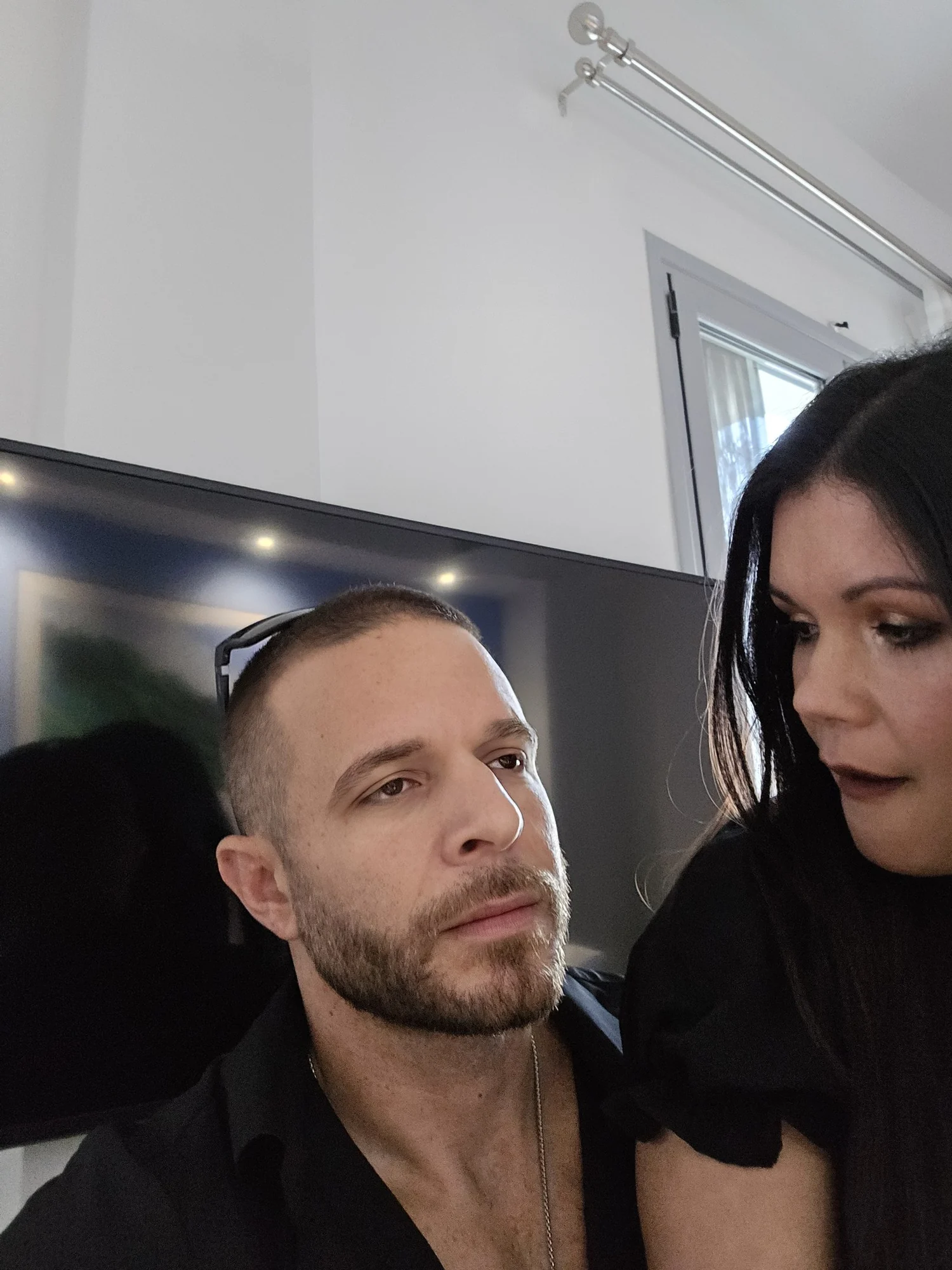
Travel sometimes makes this easier to see, which is not the same as saying travel is required. In the summer of 2025 I was in Athens with my wife. The photograph at the top of this piece is from an ordinary evening there — not a ceremony, just the two of us in a quiet room at the end of a day of walking. I remember the feeling more than I remember a lesson: the day had been long, the city was still out there, and for a few minutes there was no need to add anything to it.
I don’t want to turn that evening into more than it was. It was a pause. Focus, as I practice it, is a way of taking pauses like that on purpose, including on the days when I have not gone anywhere, and of coming back to the next task without a speech about how I did.
What the tools are for
Boxing trains composure under pressure. Sitting trains it without an opponent. Stoic ideas give both of those a vocabulary. Fatherhood is the test that is not a drill. If these tools only made me more interested in my own inner weather, they would be a hobby. I want them to make me more available.
I fail at this, of course. The mind runs. The patience runs out. The phone is still in the other room, and sometimes I go and get it. The practice is not a personality upgrade. It is a return, repeated often enough that returning becomes more familiar than the spiral.
I will keep sitting. I will keep using the few principles that have held up. I will keep training in the gym. I don’t need these practices to impress anyone, and I don’t need them to be complete. I need them to be close at hand on the days when my attention is thin and my patience is thinner.
If you came here looking for a system, I don’t have one to hand you. If you came here looking for a person who is trying to stay honest about a few useful habits, you are in the right place. The work is small. The work is repetitive. The work is, on most days, enough.
For the shorter frame around these tools, see Mindset. The books I mentioned, and the other principles I come back to, are in Reading & Principles and in a longer essay, Books and Principles.